
Living organisms require special care during transit. We ship live specimens Monday through Wednesday to avoid weekend delays. Orders placed after Wednesday will ship the following Monday unless expedited shipping is selected.
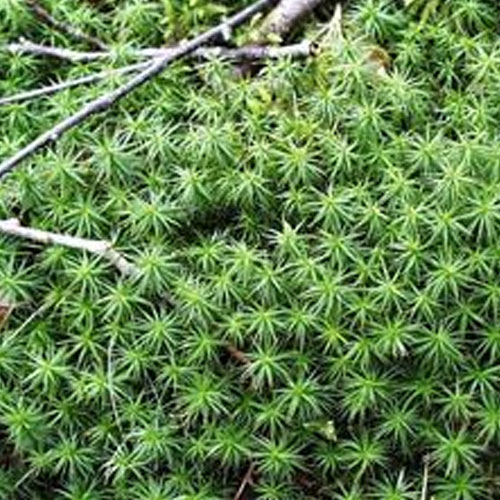
Polytrichum
Price range: $7.50 through $10.00
Mosses are small plants that are rarely taller than 2 inches (50 mm). They typically grow close together in clumps or mats in damp or shady locations. They do not have flowers and their simple leaves cover the thin wiry stems. At certain times mosses produces spore capsules which may appear as beak-like capsules borne aloft on thin stalks.
Botanically, mosses are bryophytes, or non-vascular plants. They can be distinguished from the apparently similar liverworts (Marchantiophyta or Hepaticae) by their multi-cellular rhizoids. Other differences are not universal for all mosses and all liverworts, but the presence of clearly differentiated “stem” and “leaves”, the lack of deeply lobed or segmented leaves, and the absence of leaves arranged in three ranks, all point to the plant being a moss.
The division Bryophyta formerly included not only mosses, but also liverworts and hornworts. These other two groups of bryophytes now are often placed in their own divisions.
In addition to lacking a vascular system, mosses have a gametophyte-dominant life cycle, i.e. the plant’s cells are haploid for most of its life cycle. Sporophytes (i.e. the diploid body) are short-lived and dependent on the gametophyte. This is in contrast to the pattern exhibited by most “higher” plants and by most animals. In vascular plants, for example, the haploid generation is represented by the pollen and the ovule, whilst the diploid generation is the familiar flowering plant.
Related products
-
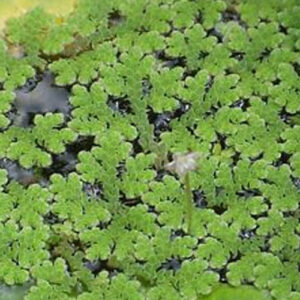 Azolla, Ferns, Live Plant Specimens
Azolla
Price range: $6.00 through $16.00 Select options This product has multiple variants. The options may be chosen on the product page -
 Ferns, Ferns Sp. Complete Plant, Live Plant Specimens
Ferns Sp. Complete Plant – Each
$8.50 Add to cart -
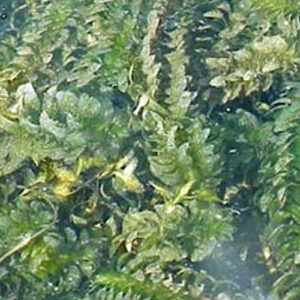 Elodea (Anacharis), Flowering plants, Live Plant Specimens
Elodea Tips (Anacharis) – Class 30
$30.00 Add to cart -
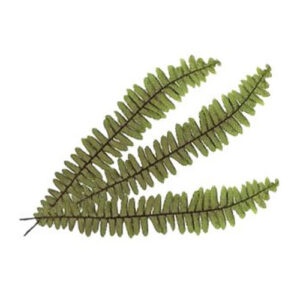 Fern Fronds, Ferns, Live Plant Specimens
Fern Fronds w/ Sori – Each
$4.50 Add to cart